Skip to content
Yorkshire Hindus Heritage Hub
ॐ सर्वे भवन्तु सुखिनः ॐ

Yorkshire Hindus

A living sanctuary of deities, scripture, teaching and time — carried from Yorkshire to the eternal.

Light a Diya for Yorkshire
Tap a diya to light it
Daily Panchang

Today's Hindu Almanac

Live tithi, nakshatra and auspicious timings for Leeds, Yorkshire — updated automatically each day.

Monday, 19 October 2026 Navami Shukla Paksha · Somvara
☀️
Tithi BeganMon, 19 Oct — 6:22 AM (Ashtami ended)
Tithi EndsTue, 20 Oct — 8:20 AM (Dashami begins)
NakshatraUttara Ashadha
YogaDhriti
KaranaVanija
MonthAshwin · V.S. 2083
Sunrise7:41 AM
Sunset6:00 PM
Moonrise3:50 PM
Abhijit Muhurta12:30 PM – 12:51 PM
Rahu Kaal8:58 AM – 10:16 AM

Leeds, Yorkshire · Lahiri ayanamsha 24.228°

Deity of the Day

Today's Divine Focus

A new face of the divine, spotlighted daily — the full pantheon is always open to explore.

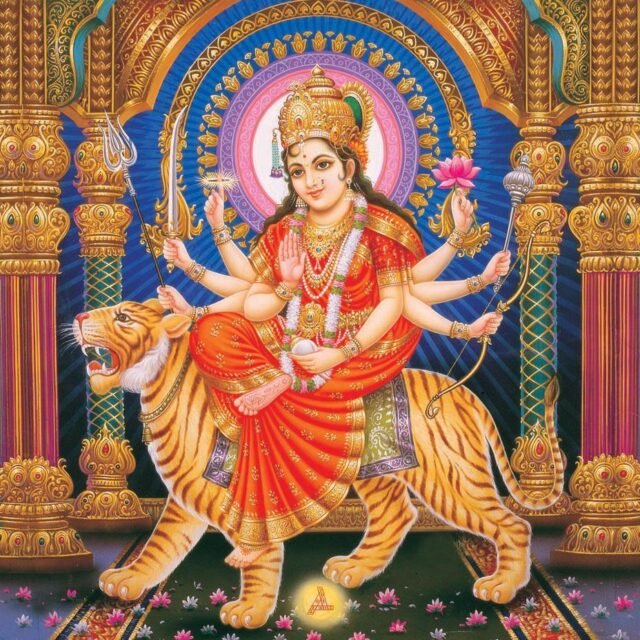
Durga
दुर्गा

Durga

The Invincible Warrior

Durga is the fierce, warrior manifestation of the Divine Mother, created by the combined energies of all the gods to defeat the buffalo demon Mahishasura. Her…

Warrior Power Protection Shakti Victory over Evil Navdurga
Mantra

ॐ दुं दुर्गायै नमः

Full Profile

View All Deities

Mantra of the Day

Today's Verse

A mantra, shloka or aarti to carry with you today — the whole library is always open.

🌙 Shiva
शिव चालीसा

Shiv Chalisa

Shiva

Forty devotional verses in praise of Lord Shiva — recited especially on Mondays and during Maha Shivaratri.

[Doha (Opening)] जय गणेश गिरिजा सुवनnमंगल मूल सुजान ।nकहत अयोध्यादास तुमnदेहु अभय वरदान ॥
Read Full Verse

View Full Library

Know About Hinduism

The Wheel of Knowledge

Twelve gateways into the philosophy, scripture and symbolism of Sanatana Dharma.

The Eternal Way

What Is Sanatana Dharma?

What the world calls "Hinduism" is known to its own tradition as Sanatana Dharma — the Eternal Order or Eternal Way. Unlike many world religions, it has no single founder, no single holy book, and no single date of origin. It grew organically across the Indian subcontinent over more than four thousand years, absorbing and honouring an extraordinary diversity of philosophies, deities and practices.

At its heart is the idea that truth (Satya) is one, though the sages describe it in many ways — "Ekam Sat Vipraha Bahudha Vadanti" (Rigveda). Hindus may worship a personal God with form, meditate on a formless Absolute, or pursue knowledge, devotion, service or discipline — all are considered valid paths up the same mountain.

Hinduism's Oldest Scriptures

The Four Vedas

The Vedas ("knowledge") are the oldest scriptures of Hinduism, composed in Sanskrit and transmitted with remarkable precision through oral recitation for thousands of years before being written down. There are four: the Rigveda (hymns of praise to the cosmic forces), the Yajurveda (ritual formulas for sacrifice), the Samaveda (melodies and chants), and the Atharvaveda (everyday wisdom, healing and household rites).

Each Veda has four layers — Samhitas (hymns), Brahmanas (ritual commentary), Aranyakas (forest texts) and Upanishads (philosophical dialogues) — moving from ritual toward pure metaphysics. The Upanishads, in particular, form the philosophical summit of Vedic thought and are collectively known as Vedanta, "the end of the Vedas."

The Three Cosmic Functions

The Trimurti — Creator, Preserver, Transformer

Hindu cosmology envisions the universe moving through endless cycles of creation, preservation and dissolution. This is personified as the Trimurti — three great gods representing the three functions of the one Ultimate Reality (Brahman): Brahma, the Creator, who brings the universe into being; Vishnu, the Preserver, who sustains cosmic order (dharma) and periodically incarnates on Earth to restore balance; and Shiva, the Transformer, who dissolves the universe at the end of each age so that creation may begin anew.

These are not three rival gods but three aspects of a single divine process — much as one person can be a parent, a worker and a friend. Destruction, in this view, is never an end in itself, but the necessary clearing that makes new creation possible.

Action, Consequence and the Soul's Journey

Karma & Reincarnation

Karma literally means "action." Hindu philosophy holds that every thought, word and deed leaves an imprint that shapes future experience — not as punishment from an external judge, but as a natural law of cause and effect, much like a seed determining its fruit. Good actions cultivate good tendencies and outcomes; harmful actions cultivate suffering.

The soul, or Atman, is believed to be eternal and to pass through many bodies across many lifetimes — a process called Samsara, the cycle of birth, death and rebirth. The ultimate goal of spiritual life is Moksha — liberation from this cycle, achieved through self-realisation, righteous action, devotion or knowledge, depending on the path a person follows.

Dharma, Artha, Kama, Moksha

The Four Purusharthas — Aims of Life

Classical Hindu thought identifies four legitimate aims of human life, the Purusharthas. Dharma is righteous conduct and duty — living in harmony with truth and one's responsibilities. Artha is the pursuit of prosperity, security and the material means to live well. Kama is the pursuit of pleasure, love, beauty and aesthetic and emotional fulfilment. Moksha is spiritual liberation — freedom from the cycle of rebirth.

Rather than rejecting worldly life, this framework integrates it: material success and enjoyment are welcomed, provided they are pursued within the bounds of dharma and ultimately understood as stepping stones, not the final destination, on the soul's journey toward liberation.

Student, Householder, Retiree, Renunciate

The Four Ashramas — Stages of Life

Traditional Hindu society mapped a well-lived life onto four stages, or Ashramas. Brahmacharya is the student stage — years devoted to learning, discipline and self-formation. Grihastha is the householder stage — marriage, family, career and contribution to society, considered the stage that sustains all the others. Vanaprastha is the gradual retreat stage — stepping back from worldly responsibility to focus more on reflection and spiritual practice. Sannyasa is renunciation — the final stage of letting go of worldly ties entirely in single-minded pursuit of liberation.

Few follow this structure literally today, but it remains a widely respected map of how engagement with the world can gracefully give way to inward spiritual focus over a lifetime.

Ways to Union with the Divine

The Four Paths of Yoga

"Yoga" means union — the joining of the individual soul with the Divine. The Bhagavad Gita describes several complementary paths suited to different temperaments. Jnana Yoga is the path of knowledge and self-inquiry, discerning the eternal Self from the temporary. Bhakti Yoga is the path of loving devotion to a personal form of God. Karma Yoga is the path of selfless action, performing one's duties without attachment to results. Raja Yoga is the path of meditation and mental discipline, popularly associated with the physical postures (asanas) that have become widely known in the West as simply "yoga."

No single path is considered superior — Krishna teaches in the Gita that a sincere seeker may follow whichever path suits their nature, and all lead toward the same realisation.

The Primordial Vibration

Om — The Sound of Creation

Om (ॐ), also written Aum, is regarded as the primordial sound from which all of creation emerged — the vibration underlying the universe itself. The Mandukya Upanishad describes its three phonetic components (A-U-M) as corresponding to waking, dreaming and deep sleep, with the silence after the sound representing the fourth, transcendent state of pure consciousness.

For this reason, Om is chanted at the beginning and end of most mantras, prayers and meditation sessions. It is simultaneously a sound, a symbol, and — for many practitioners — a direct doorway into stillness and presence.

The Central Insight of the Upanishads

Atman & Brahman — Self and the Absolute

Perhaps the most profound teaching of the Upanishads is the relationship between Atman, the innermost Self, and Brahman, the boundless, formless ground of all existence. Various Upanishadic statements — the Mahavakyas, or "great sayings" — point toward their identity: "Tat Tvam Asi" ("Thou art That"), and "Ayam Atma Brahma" ("This Self is Brahman").

In this view, the individual sense of a separate, limited self is a kind of veiling of a deeper truth — that one's true nature is not separate from the infinite reality underlying the whole universe. Realising this directly, rather than merely believing it intellectually, is considered the highest goal of spiritual practice — Moksha, liberation.

Om, Lotus, Trishula, Shankha, Diya

Sacred Symbols of Hinduism

Hindu art and ritual are woven through with symbols carrying layered meaning. The Lotus (Padma) grows from muddy water into an unstained, beautiful flower — a symbol of purity and spiritual unfolding despite worldly circumstance, and the seat of many deities. The Trishula (trident) of Shiva represents the three fundamental powers — creation, preservation and destruction. The Shankha (conch shell), associated with Vishnu, was blown before battle as a call to righteous action and is used to this day in temple worship. The Diya, a small oil lamp, represents the dispelling of ignorance by inner light and is central to Diwali and daily aarti. Together with Om, these symbols form a visual vocabulary of the tradition's core values: purity, courage, balance and illumination.

The Shad Darshanas

Six Schools of Hindu Philosophy

Classical Hindu philosophy developed six orthodox schools of thought, the Shad Darshanas, each a complete system of logic and metaphysics: Nyaya (logic and epistemology), Vaisheshika (atomistic natural philosophy), Samkhya (dualistic analysis of consciousness and matter), Yoga (the practical discipline built on Samkhya's metaphysics), Mimamsa (the philosophy of Vedic ritual and duty), and Vedanta (philosophy of the Upanishads, further divided into Advaita, Vishishtadvaita and Dvaita sub-schools on the nature of the Self and God).

Far from demanding uniform belief, this tradition of rigorous, centuries-long philosophical debate is itself one of Hinduism's great intellectual legacies.

A Year Measured in Sun, Moon and Spirit

Festivals & the Hindu Calendar

The Hindu calendar is lunisolar: months follow the phases of the moon while an occasional leap month (Adhik Maas) keeps the calendar aligned with the solar year. Each day is defined by a precise set of astronomical elements — the Panchang ("five limbs"): Tithi (lunar day), Vara (weekday), Nakshatra (lunar mansion), Yoga and Karana — the very calculations behind this site's Daily Panchang widget.

Festivals mark this rhythm throughout the year: Makar Sankranti welcomes the sun's northward journey, Maha Shivaratri honours Lord Shiva, Holi celebrates spring and the triumph of good, Navratri and Dussehra honour the Divine Mother's victory over evil, and Diwali — the festival of lights — celebrates the return of light and righteousness. See the Upcoming Festivals section for what's coming next.

Explore All Teachings

Upcoming Festivals

What's Next on the Calendar

Live countdowns to every festival and community gathering ahead.

✨
Next Up

Maha Navami

Monday, 19 October 2026

Ninth day of Sharad Navratri worship.

Add to Calendar
–Days
–Hrs
–Min
–Sec
🏹
1d

Dussehra / Vijayadashami

20 Oct 2026 · 5:00 PM

City Square, Leeds

✨
6d

Sharad / Kojagiri Purnima

25 Oct 2026

✨
10d

Karva Chauth

29 Oct 2026

✨
13d

Ahoi Ashtami

1 Nov 2026

✨
16d

Rama Ekadashi

4 Nov 2026

✨
18d

Dhanteras

6 Nov 2026

🪔
20d

Diwali Mela

8 Nov 2026 · 5:00 PM

City Square, Leeds

✨
20d

Diwali / Amavasya

8 Nov 2026

View Full Calendar

View Full Gallery

Join the Yorkshire Hindus Community

From festival celebrations to weekly satsang — there's a place for you here.

Get in Touch
Facebook Instagram